Easy
Likely the entry point for bonus mode. Verify cost and expected feature length in the game help screen.
Rules Guide
Start with the screen in front of you: check the help panel, choose a small stake, watch the claw round, and stop at the limit you set before playing.
Updated 2026-06-24 - 18+ - independent guide
Interface
To play Lucky Ducky, read the help screen, choose a stake, start the claw-machine round, watch the result state, and stop when your preset limit is reached.
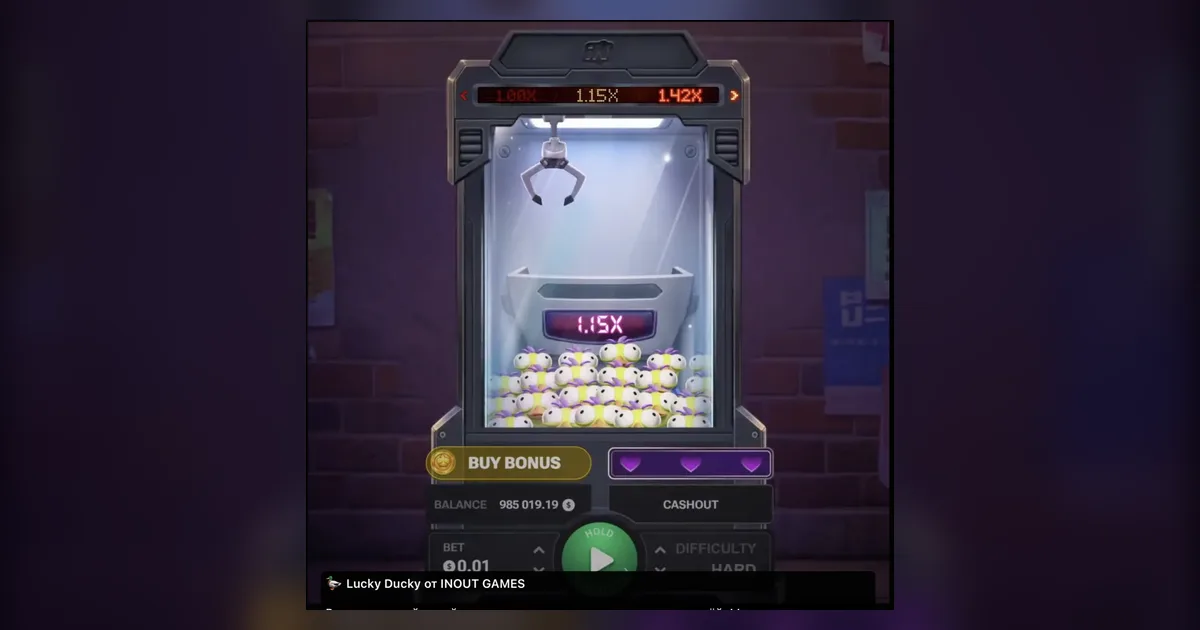
Lucky Ducky is built around a toy-claw cabinet, so the important parts are easy to spot: prize area, claw movement, result screen, and bonus panel. For PLay Luck Duck searches, the beginner check is not a trick or a strategy. It is the identity check: Lucky Ducky, InOut Games, 95.5% RTP.
The screenshots show the main cabinet, cashout, buy bonus, difficulty menu, free games, total win, and provider/RTP screen. That is enough to explain the flow, but not enough to replace a live help file. If the game appears in a casino lobby, open the rules panel before the first real-money stake.
Lucky Ducky should be treated as an instant-style casino game, not a skill arcade cabinet. The claw animation gives the round personality, but the result is still controlled by the game math. A player can make sensible stake choices, but cannot turn the claw into a skill test unless the official rules state that skill affects the outcome.
| Screen element | What it tells you | What to verify |
|---|---|---|
| Stake control | How much each round costs | Minimum and maximum stake |
| Start control | Begins a paid or demo round | Whether autoplay exists |
| Claw area | Main visual event | Whether player input affects timing |
| Cashout screen | Round-end result state | Exact payout calculation |
| Bonus buy | Paid feature access | Cost, volatility, and limits |
| RTP screen | 95.5% return model | Casino-specific help file |
Steps
The round flow is simple in appearance, but the money management is where most mistakes happen. A player who increases stake size after a dry run is not improving the game math; they are only making each outcome more expensive. The 95.5% RTP stays the same across the long-run model unless a specific mode has its own listed RTP.
Mobile players should also test touch accuracy. The cabinet looks portrait-friendly, but a small phone can make buttons feel close together. Before paid play, check the stake field, start button, bonus button, and help icon without rushing.
Bonus Buy
The bonus menu screenshot shows four mode labels: Easy, Medium, Hard, and Very Hard. Those names suggest different risk levels, but the screenshot does not tell us the price, feature length, prize frequency, or RTP for each mode.
In many casino games, harder bonus-buy modes cost more or swing harder. Lucky Ducky may follow that pattern, but the live rules screen has to say so. Until then, the safest guide is simple: name the modes, explain the risk, and avoid made-up numbers.
Likely the entry point for bonus mode. Verify cost and expected feature length in the game help screen.
A middle label that may change price or prize profile. Check the rules before assuming it is safer or richer.
A higher-risk label by name, but the live help screen needs to explain the math.
The sharpest label shown in the interface. Use only with a strict limit if the feature is available.
Rules Check
A proper Lucky Ducky paytable should answer five questions: what the base round can return, how the claw event resolves, what triggers free games, how bonus buys are priced, and whether all modes share the same RTP. If the paytable does not answer those questions, pause and look for the provider help icon or casino support link.
The current game material gives us the broad idea and the 95.5% RTP, but not the full prize table. For that reason, this site does not print guessed max win, volatility, or symbol values. A rules guide is more useful when it admits what still needs the live screen.
| Paytable item | Why it matters |
|---|---|
| RTP by mode | Shows whether base play and bonus buy share the 95.5% figure |
| Stake range | Prevents accidental oversized rounds |
| Feature trigger | Explains how free games begin |
| Bonus buy price | Shows the true cost of each mode |
| Round history | Helps players check recent results without guessing |
| Malfunction rule | Explains what happens if a connection drops |
Player Safety
The first mistake is treating the claw as a skill input. Unless the official rules say timing changes the outcome, the claw should be seen as presentation. The second mistake is chasing a bonus mode because the last few base rounds missed. The third mistake is using bonus buy before reading its price and variance notes.
Another mistake is using a casino because it has a similar game title. Search noise around PLay Luck Duck can pull in unrelated Lucky Duck pages. The provider label is the filter. If the screen does not say Lucky Ducky by InOut Games, it is not the same project.
Finally, do not use borrowed money, bill money, or money needed for family expenses. Lucky Ducky has a house edge in the long-run model. That makes limits part of the rules, not an optional extra.
Comparisons
These pages compare Lucky Ducky with nearby arcade mechanics so players can see how the claw-machine flow differs from road, jump, and sports rounds.
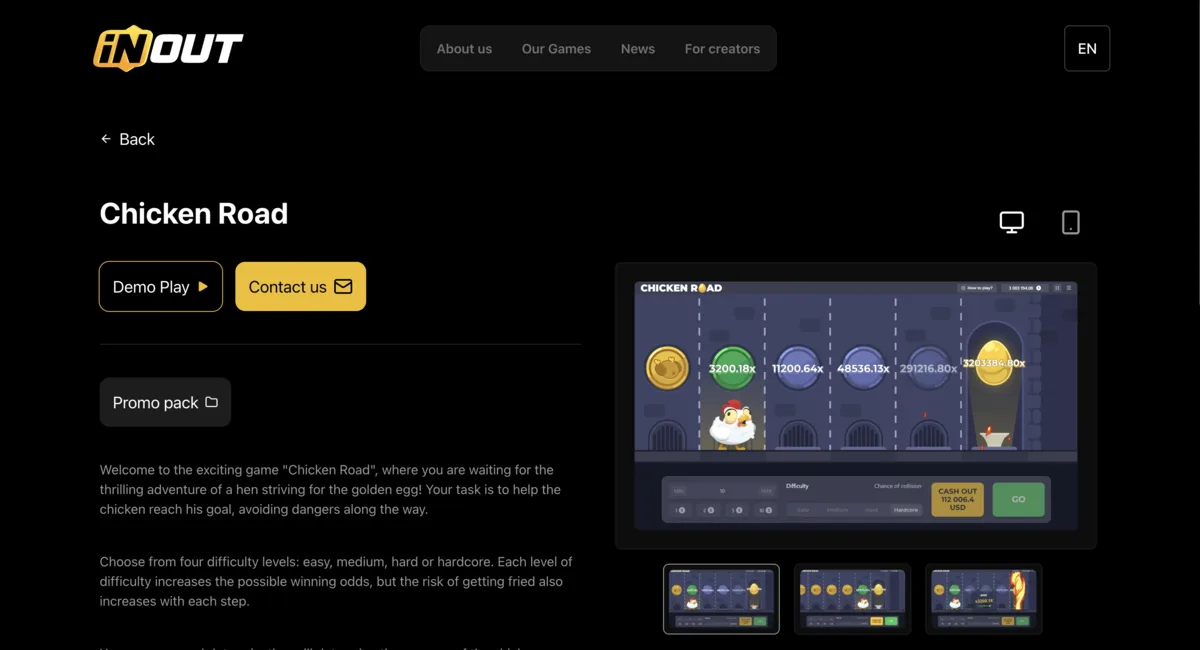
InOut Games - RTP 98%
Chicken Road is the closest same-provider benchmark: bright road-risk pacing, a public provider page, and a higher listed RTP.
Open comparison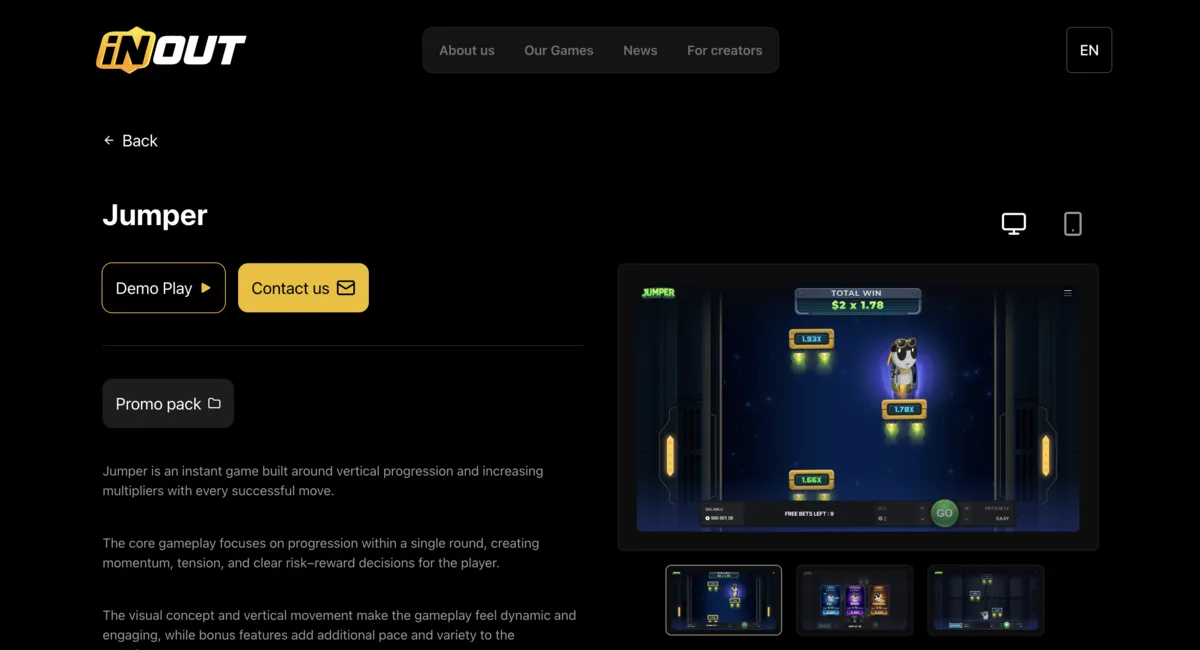
InOut Games - RTP 96%
Jumper keeps the same quick-play energy but swaps the prize claw for vertical progress and timing pressure.
Open comparison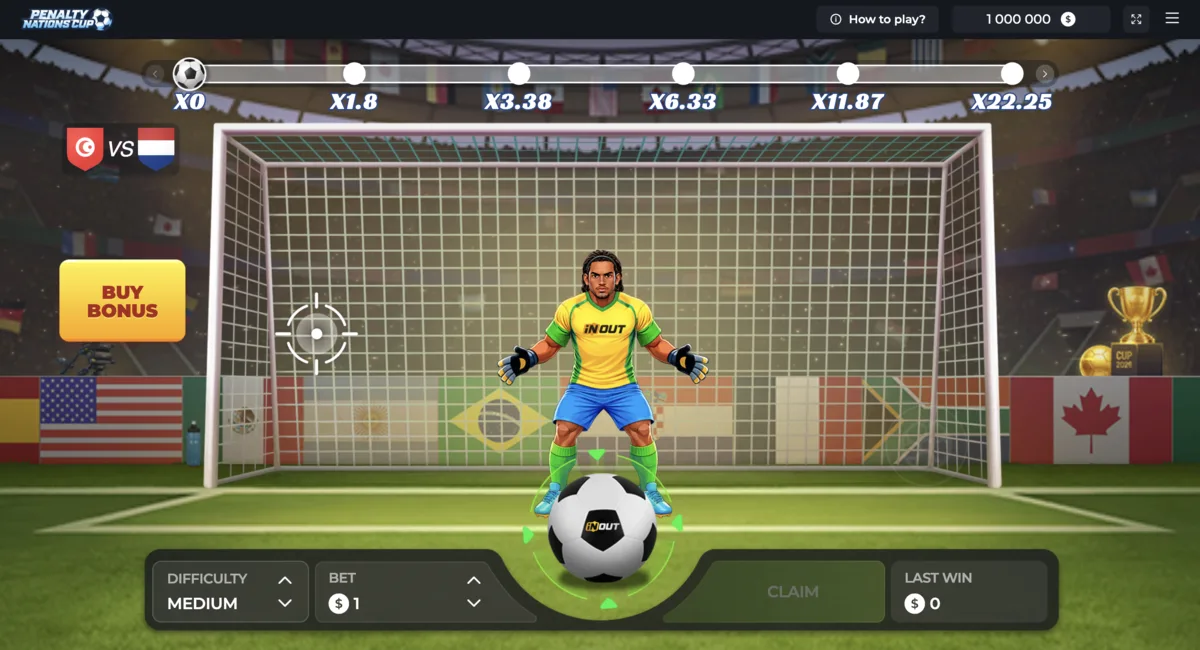
InOut Games - RTP 95%
Penalty Nations Cup is the sports contrast: same provider family, different mood, and far less toy-cabinet charm.
Open comparisonGlossary
The cabinet is the visual frame for the game. It makes Lucky Ducky feel like an arcade claw machine, but it should not be read as proof that skill controls the result. The cabinet is presentation unless the official rules say otherwise.
The claw event is the main animation that resolves a round. The player watches the claw move toward the prize area, then waits for the result state. If the game offers skip controls, the result should remain the same whether the animation is watched or skipped.
The try-again screen is a losing or non-paying result state visible in the screenshots. It should not be interpreted as a near miss that makes the next round stronger. It is simply one possible result in the game flow.
The cashout screen confirms a round-end value. A player should read it before starting another round, especially on mobile where quick taps can move the game forward before the result is fully understood.
Free games screens are visible in the image set, but the trigger rules are not proven by public source material. The help screen should explain how free games begin, how many rounds are awarded, and whether any special multiplier or prize rule applies.
Practice Walkthrough
A careful first session begins outside the paid round. Open the rules, confirm the title, confirm the provider, and read the RTP line. If a casino cannot show the Lucky Ducky help file, do not use a real-money stake yet. The help file is the only place that can settle the open questions around bonus prices, feature triggers, and mode-specific rules.
After reading the help screen, set a small test stake or use demo mode. The first aim is to understand the screen order. Identify where the result appears, where the stake can be changed, and how the bonus menu opens. Do not turn on autoplay or rapid play while learning.
After a round, pause for a moment. Check whether the state is win, no win, free games, total win, or another message. This habit prevents accidental repeats. It also makes the game feel less automatic, which is useful for responsible play.
If the screen offers a bonus buy, read the price before tapping. A feature purchase can cost many base-round stakes. If the cost is not clear, close the menu. The game is not asking for a decision that must be made at once.
The last step is the most important. The session plan should be written before play: budget, time, whether bonus buys are allowed, and the stop point. When that point arrives, the session is finished. A bright win screen or a frustrating miss should not rewrite the plan.
Rule Reading
The help screen should explain what a base round costs, how the claw event resolves, and what result states can appear. It should also state whether any player action after pressing start affects the outcome. If the rules do not say timing matters, timing should not be treated as a skill edge.
Check whether the game has autoplay, turbo mode, sound controls, and a history panel. Autoplay and turbo mode can make sessions move faster than expected. A history panel can help verify the last result if the screen changes quickly. These controls are part of learning the game, not decorative extras.
The feature section should explain free games, buy bonus, mode labels, and any extra prize rules. If Easy, Medium, Hard, and Very Hard have different prices, the paytable should show those prices clearly. If they have different RTP values, that should also be visible before the player buys a feature.
Ask support if the live rules screen is incomplete. A clear support answer should name Lucky Ducky, InOut Games, and the exact casino jurisdiction. If support gives a generic answer about bonus buys without naming the game, do not treat it as final proof.
Mobile play adds practical questions. Can the stake be changed without errors? Is the bonus button far enough from the start control? Does the help screen fit the display? Can the player see the current balance and last result? A rules guide is only useful if the player can use it on the device where the game will be played.
Final Rule Check
Before the first paid Lucky Ducky round, confirm five items in order: exact title, InOut Games provider label, 95.5% RTP or current help-screen RTP, stake range, and bonus-buy rules. If any item is missing, the session is not ready. This check takes less time than solving a withdrawal or bonus dispute later.
After those five items are clear, choose the smallest useful stake and play slowly enough to read the result screen. The first session is for learning. There is no reason to use bonus buy, rapid play, or large stakes while the screen flow is still new.
Good notes are practical: what the buttons do, where the rules sit, what the result screens mean, and what the session limit is. Bad notes try to turn animations into predictions. Lucky Ducky should be learned as a rules-based casino game with an arcade theme, not as a physical claw cabinet.
Rule Memory
Remember the exact game identity, the provider, and the RTP before remembering any visual detail. Lucky Ducky, InOut Games, and 95.5% RTP are the core available facts. The limit is also part of the rules: a session should have a stop point before the first round begins.
If a later rules screen changes or adds detail, update the mental model from that screen rather than from memory. Casino games can vary by jurisdiction, and help files may contain country-specific notes. The safest player is the one who checks the current screen, not the one who assumes a guide covers every future version.
If support gives an answer that conflicts with the help screen, save both versions and avoid paid play until the casino resolves the conflict in writing. A clear written answer is part of safe preparation.
Review Log
Player Questions
PLay Luck Duck is the search phrase many players use for Lucky Ducky. On this site it always means the Lucky Ducky game by InOut Games, the claw-machine title with 95.5% RTP.
The screenshots and game info we have point to InOut Games. We did not find Lucky Ducky in the public InOut catalogue on 2026-06-24, so we avoid promising a release or demo until there is a direct page.
Lucky Ducky is shown with 95.5% RTP. In plain terms, that leaves a 4.5% long-run house edge before casino bonus rules, currency settings, or local terms.
Set a stake you can afford to lose, check the help screen, and start a round only after you understand the possible outcomes and bonus options.
The claw is the main visual event. It appears to grab from the prize area and resolve the round, but the exact paytable should be checked in the live game.
Those labels appear in the bonus menu screenshots. Treat them as real screen labels, then check the live rules screen for price, feature length, and RTP details.
Beginners should learn base rounds first. A bonus buy can change variance and session speed, so it should wait until the player has read the rules and set a fixed limit.